

PHILIPPINES HIGHLIGHTS INNOVATION FOR SUSTAINABLE DEVELOPMENT AT KAIST CENTER FOR SCIENCE DIPLOMACY INAUGURAL FORUM
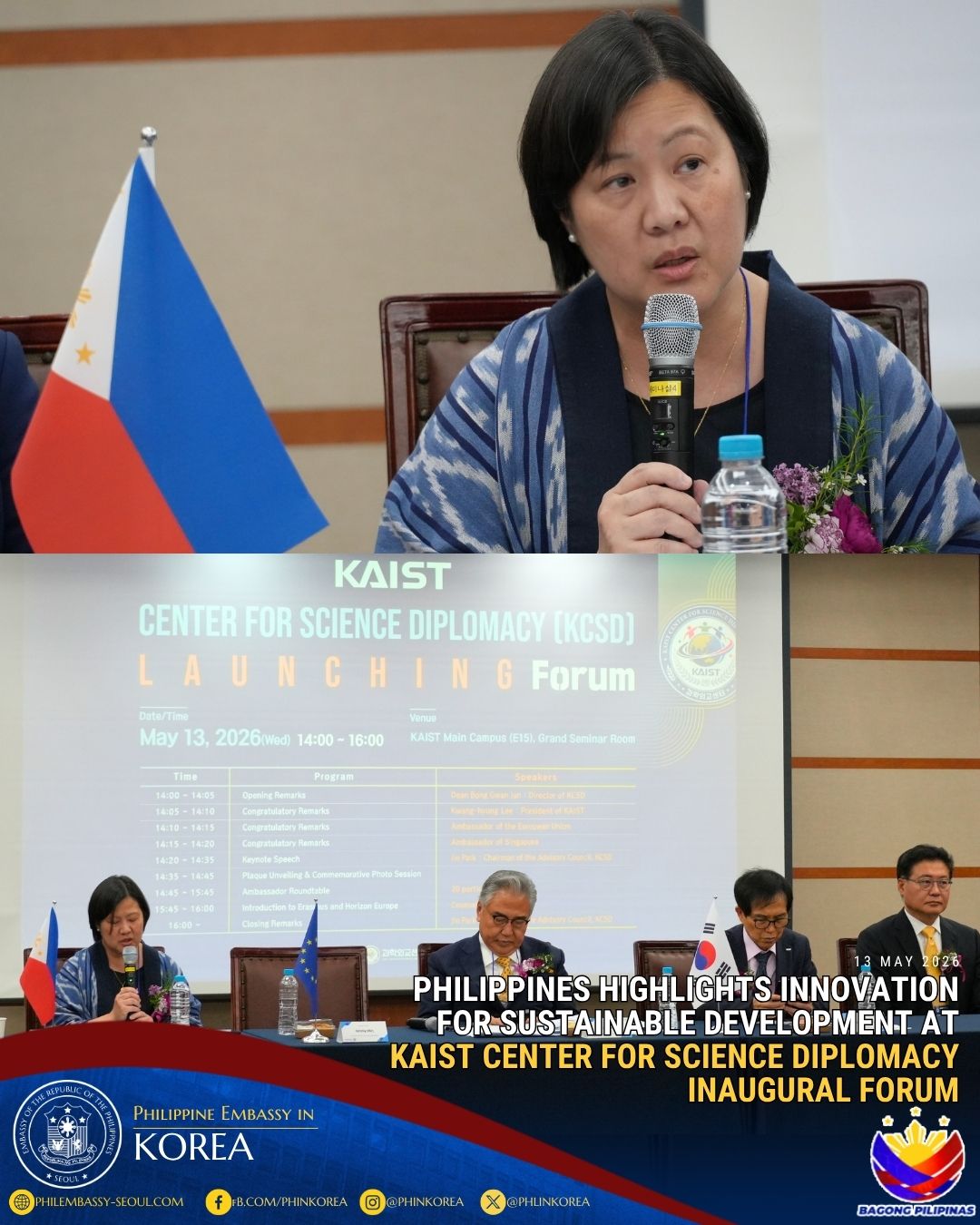
Ambassador Bernadette Therese C. Fernandez delivers speech during the KAIST Center for Science Diplomacy Inaugural Forum held at KAIST Campus in Daejeon, ROK on 13 May 2026.
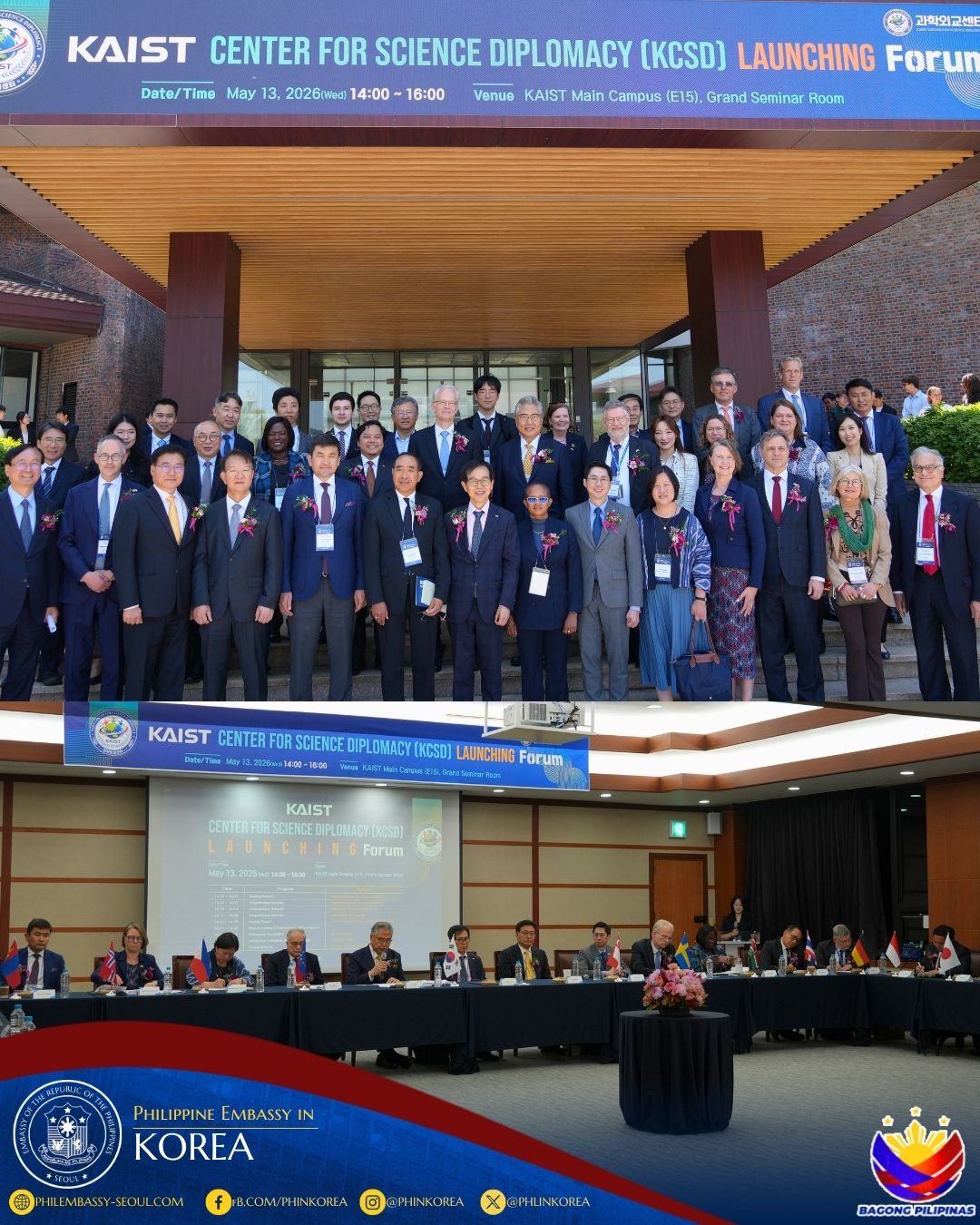
Daejeon, 13 May 2026 — Philippine Ambassador to the Republic of Korea Bernadette Therese C. Fernandez underscored that science diplomacy must be practical, people-centered, and responsive to the lived realities of vulnerable communities during the launch of the Korea Advanced Institute for Science and Technology (KAIST) - Center for Science Diplomacy (KCSD) in Daejeon.
The launch of KCSD reinforces KAIST’s role as one of the Republic of Korea’s leading institutions for science, technology, and innovation, and as a convening platform for international dialogue on frontier technologies, global governance, and science diplomacy.
In her remarks, Ambassador Fernandez highlighted Philippine initiatives in technology-enabled support for micro, small, and medium enterprises, artificial intelligence, digital transformation, agriculture, health, disaster resilience, and climate adaptation, and emphasized that innovation must advance sustainable development, not proceed at its expense. She expressed hope that the KCSD would provide a practical platform for future cooperation between Philippine and Korean academic institutions under the Philippines–ROK Strategic Partnership, including in AI, frontier technologies, research exchange, higher education, and sustainable development.
Ambassador Fernandez also conveyed the Philippines’ priorities under its 2026 ASEAN Chairship and the opportunities for deeper cooperation in emerging technologies, science governance, and inclusive innovation across ASEAN and the ROK.
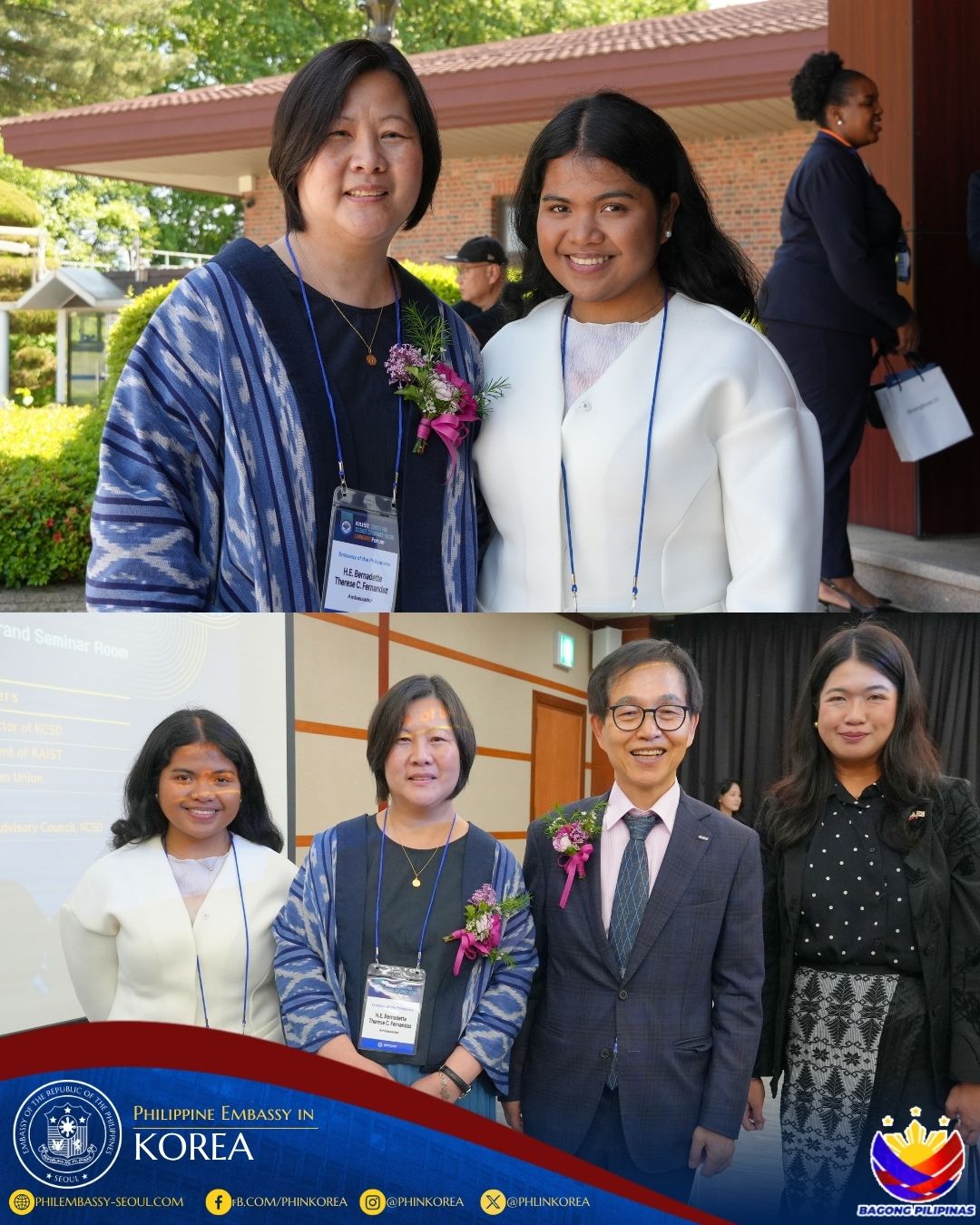
In addressing KAIST students, the Ambassador stressed the importance of working across disciplines, noting that the frontier of innovation will not be built by engineers, diplomats, lawyers, scientists, or entrepreneurs acting alone. She encouraged future innovators to develop the ability to speak across fields, with scientists understanding policy, diplomats understanding technology, regulators understanding innovation, and entrepreneurs understanding ethics.
KAIST officials noted the strong presence of Filipino talent in the university. There are currently thirty (30) Filipino students enrolled in KAIST’s undergraduate and graduate programs across various departments, ranging from Bio and Brain Engineering and Biological Sciences to Mechanical Engineering. All Filipino students study tuition-free and receive a monthly stipend from the ROK Government. END
 October 12, 2026
 October 11, 2026
 October 06, 2026
